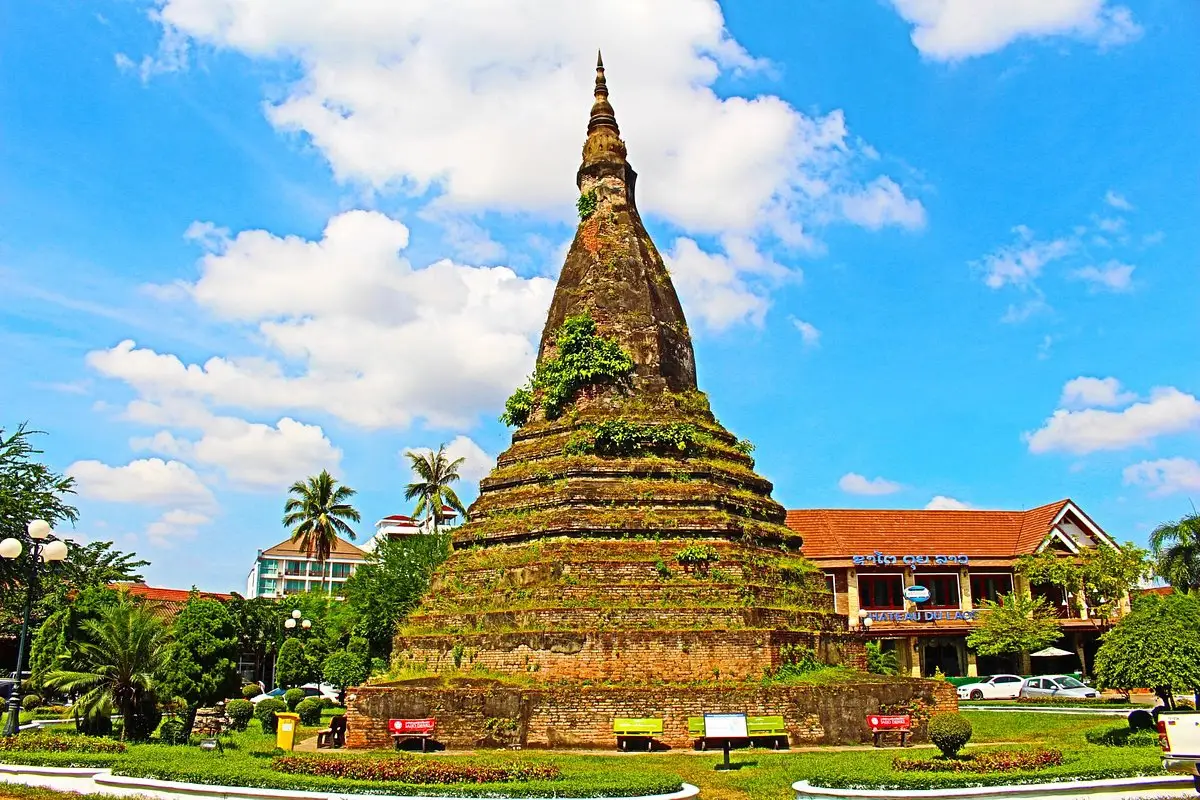
That Dam, meaning "Black Stupa," is one of Vientiane's most mysterious and historically significant monuments. Located in the center of the capital city, this ancient brick stupa is surrounded by local legends, historical intrigue, and cultural importance. Although less grand than Pha That Luang, That Dam remains one of the city's most recognizable landmarks and an important symbol of Lao heritage.
Believed to have been constructed in the 16th century during the reign of King Setthathirath, That Dam originally may have been covered in gold. According to local folklore, the stupa once protected a seven-headed Naga (mythical serpent) that watched over Vientiane and defended the city from invaders. During the Siamese invasion of 1828, it is said that the gold covering was removed, leaving behind the darkened structure seen today, which gave rise to the name "Black Stupa."
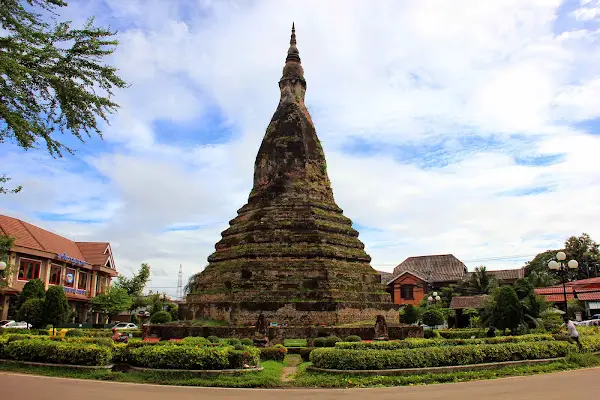
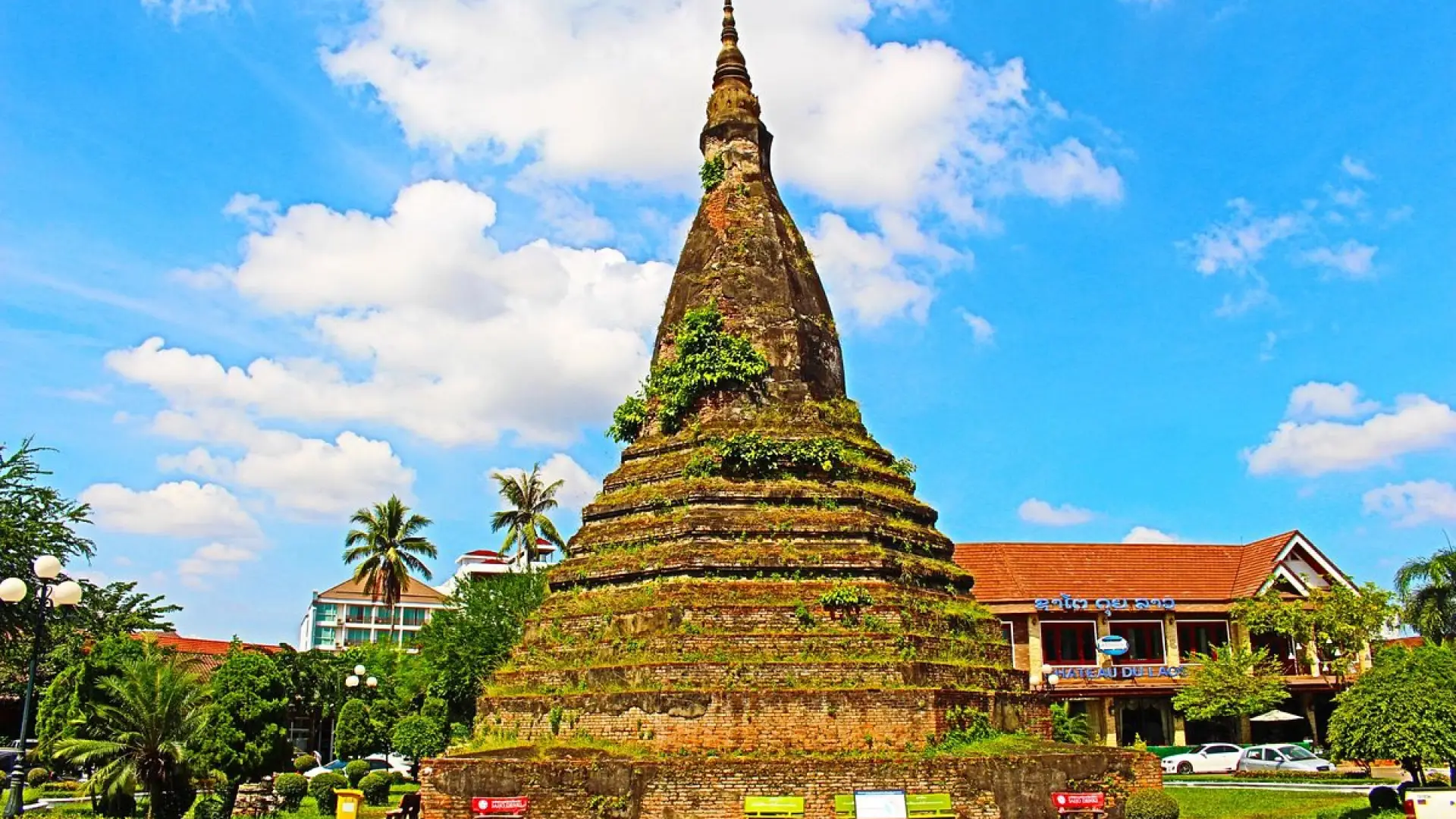
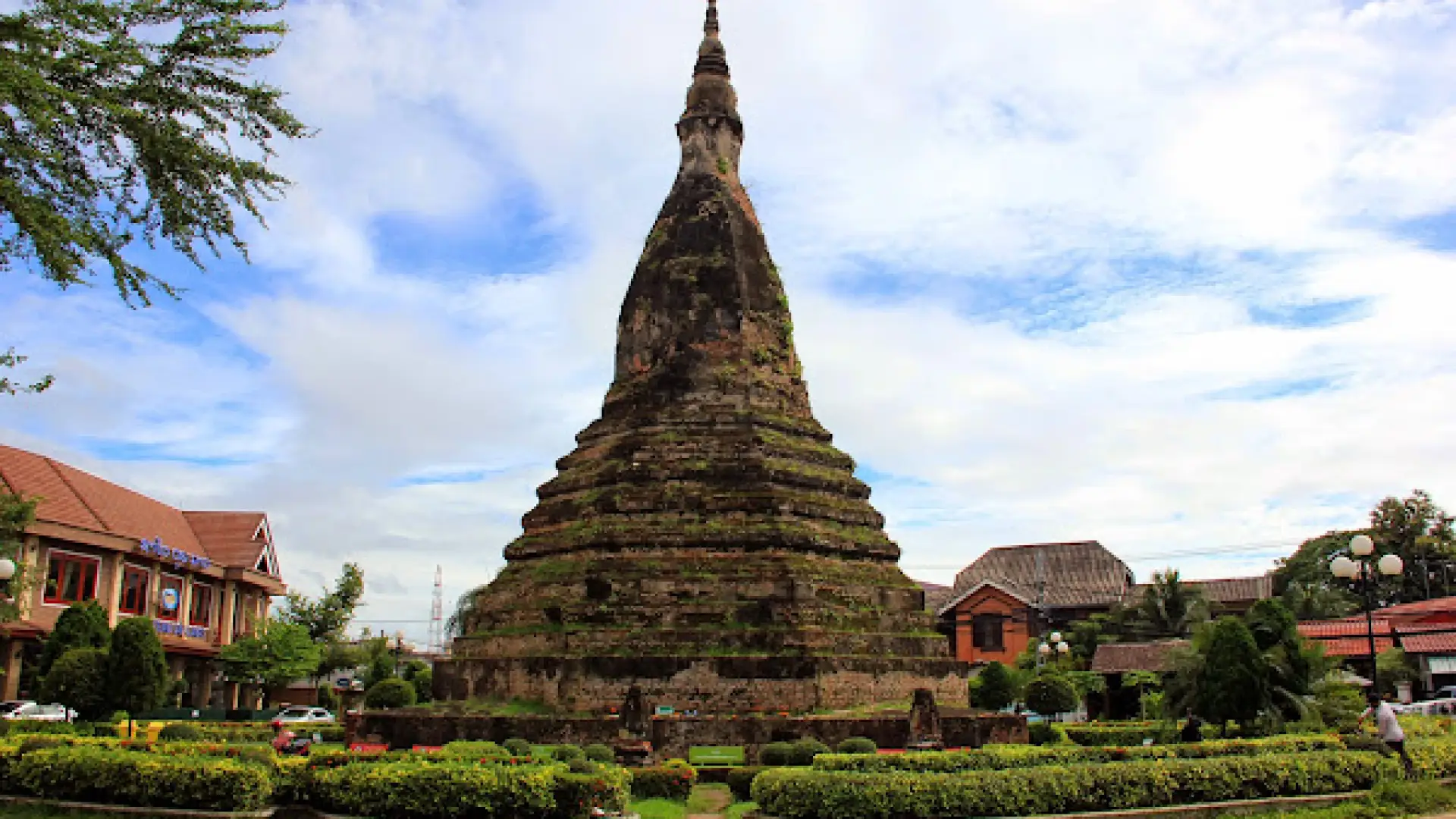
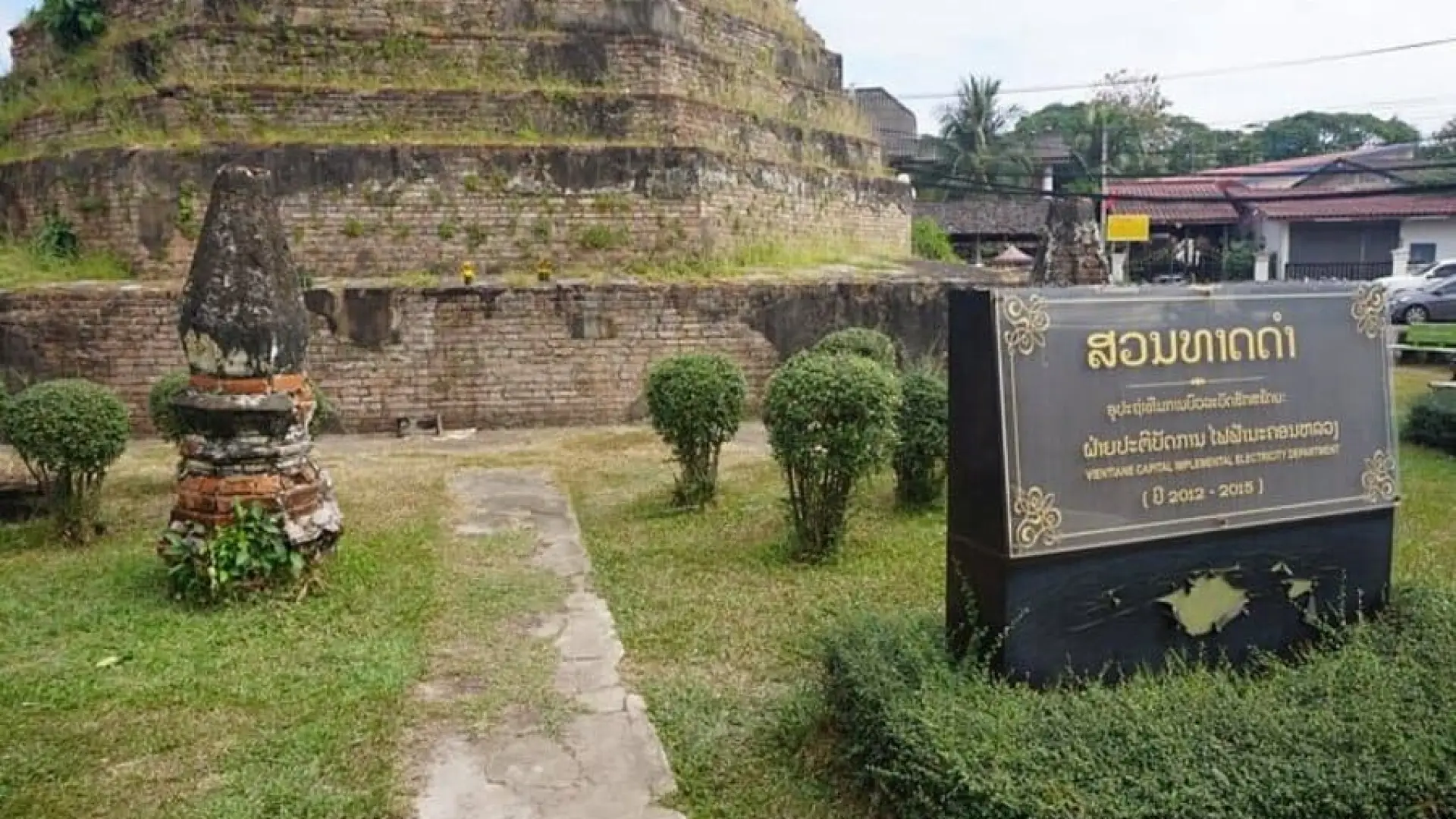
The monument stands in a small roundabout surrounded by trees and greenery, creating a peaceful contrast to the busy urban environment around it. Covered with vegetation and weathered by time, the stupa possesses a unique character that reflects centuries of Lao history. Its aged appearance, combined with the legends associated with it, attracts both history enthusiasts and photographers seeking a glimpse into Vientiane's past.
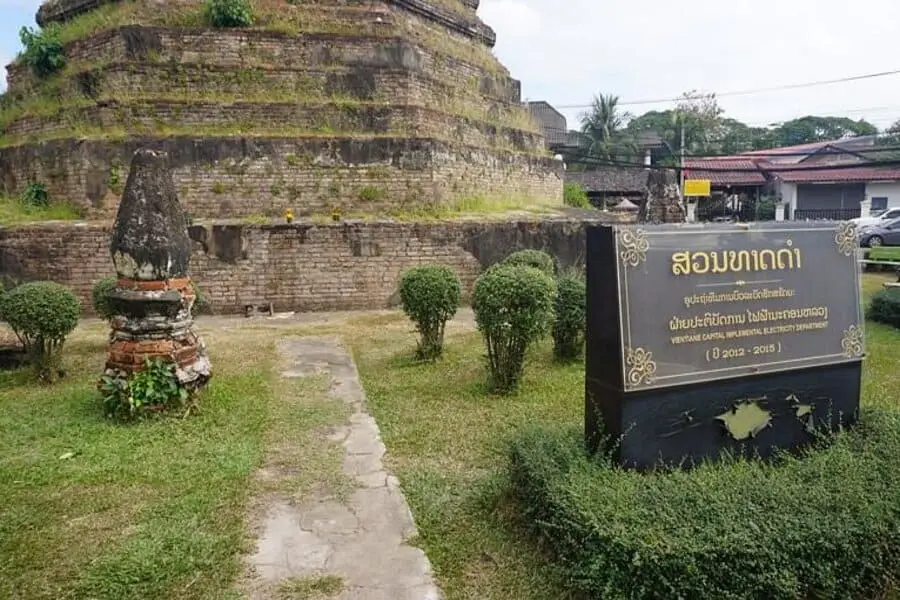
Architecturally, That Dam is a large bell-shaped brick stupa featuring traditional Lao design elements. While visitors cannot enter the interior, the exterior provides an excellent opportunity to appreciate the monument's historic craftsmanship and symbolic significance. The surrounding area is often used as a resting point during walking tours of downtown Vientiane due to its proximity to other cultural landmarks and colonial-era buildings.
Unlike active temple complexes, That Dam functions primarily as a historical monument rather than a religious center. Nevertheless, it remains an important cultural landmark that reflects the spiritual beliefs, folklore, and resilience of the Lao people. The monument's legendary connection to the protective Naga continues to be a cherished part of local tradition.
Today, That Dam serves as a reminder of Vientiane's rich history and offers visitors a fascinating blend of mythology, architecture, and heritage in the heart of the city.
Opening Hours
- Open 24 hours daily (exterior monument)
- No entrance fee.
- Best time to visit:
- Early morning for fewer visitors and cooler temperatures.
- Late afternoon for softer lighting and photography.
- Evening for illuminated city surroundings.
Highlights
- One of the oldest surviving monuments in Vientiane.
- Known as the "Black Stupa" of Laos.
- Associated with the legendary seven-headed Naga.
- Believed to date back to the 16th century.
- Historic landmark from the Lan Xang Kingdom era.
- Unique weathered appearance and photogenic setting.
- Centrally located near other major attractions.
- Rich in local folklore and cultural significance.
Visitor Tips
- Combine your visit with nearby temples and colonial-era buildings.
- Visit during sunrise or sunset for the best photography conditions.
- Read about the local Naga legend before visiting to better appreciate its cultural significance.
- Allow 15–30 minutes for a stop while exploring central Vientiane.
- Ideal for history enthusiasts and cultural travelers.